


|

|
|
|
|
FOR IMMEDIATE RELEASE | DAY 2 · WEDNESDAY 20 MAY 2026 | NAIROBI, KENYA |
Smallholder-at-scale intelligence: The AI frontier shaping Africa’s US$1 trillion agriculture future |
|
During AI EVERYTHING KENYA X GITEX KENYA, Thule Lenneiye of AGRA explained why East Africa’s agricultural transformation depends on calibrated AI that is regionally owned and globally scalable |
|
Nairobi, Kenya – 20 May 2026: Africa’s agricultural AI opportunity sits at a defining crossroads. While African agriculture contributes roughly 25% of GDP, employs 60% of the population, and holds approximately 65% of the world’s uncultivated arable land, structural constraints continue to limit productivity, resilience, and food security. |
|
Although the region is not short of agricultural AI innovation, less than 10% of African farms currently use precision farming tools, even as Africa spends more than US$90 billion annually on food imports. |
|
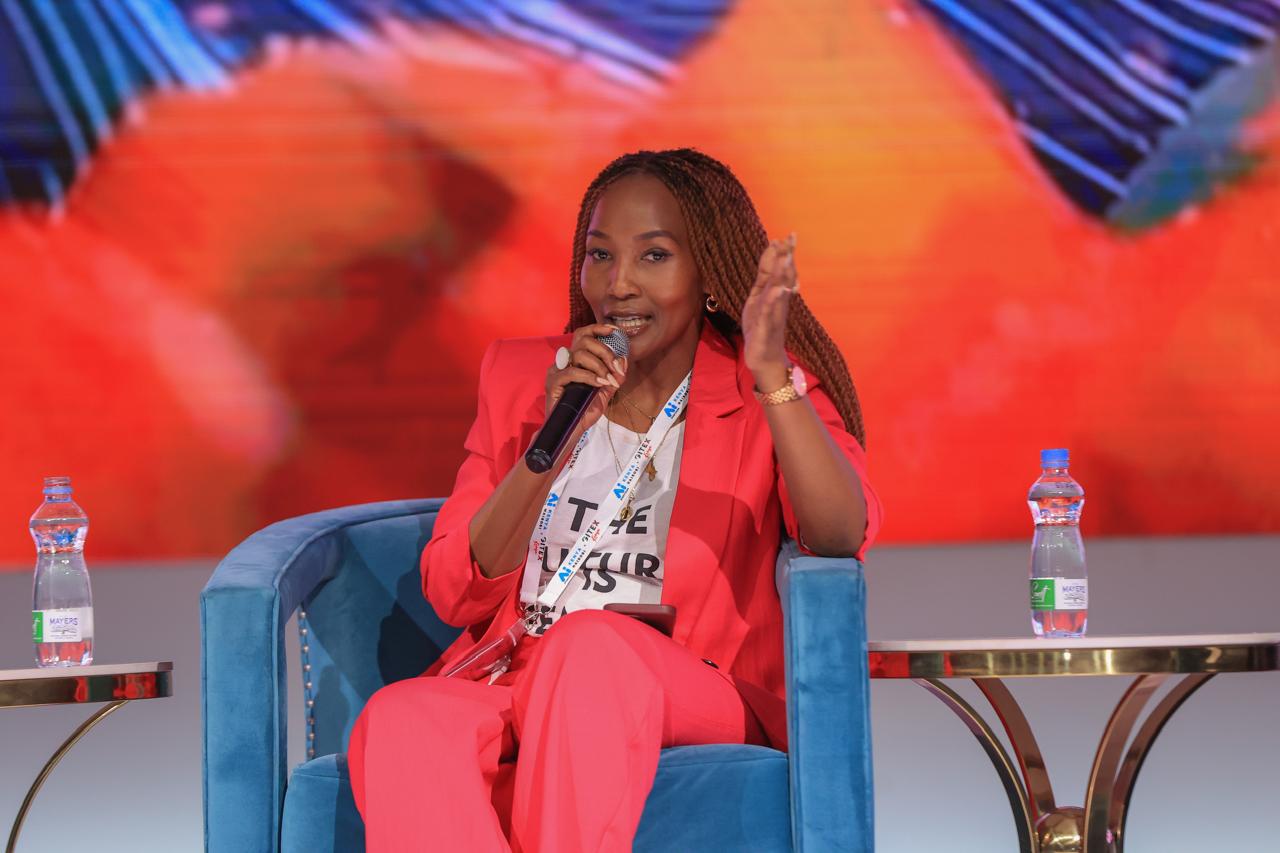
For Thule Lenneiye, Chief of Staff & Strategy at AGRA, Africa’s agritech moment depends less on AI models and more on the infrastructure of trust, data, and incentives that connects them to farmers. In her view, the future of African agritech depends on combining AI with strong community-based support systems rather than attempting to replace them entirely. |
|
This perspective emerged during her participation as a panellist at AI EVERYTHING KENYA X GITEX KENYA, East Africa’s largest AI and technology launch event. The inaugural edition runs from 19–21 May in Nairobi, convening regional and global stakeholders to advance sovereign, inclusive, and investment-driven AI ecosystems across East Africa. |
|
Focusing specifically on East African agriculture, Lenneiye argued that the challenge is no longer whether the technology works, but whether the region can build the shared digital infrastructure, interoperable systems, and delivery architecture required to scale innovation beyond isolated pilots and into the wider agricultural economy. |
Where agricultural AI meets real-world complexity |
|
AGRA focuses on strengthening food security, agricultural productivity, value chains, and climate resilience across Africa’s smallholder farming economies. Within its leadership structure, Lenneiye helps align organisational priorities with broader food security and sustainable development objectives, with a focus on digital and climate-smart agricultural transformation. |
|
During the INCLUSIVE AI EVERYTHING SUMMIT at the Sarit Expo Centre, Lenneiye explained how East African farmers are already living in the future that precision agriculture elsewhere is still preparing for – citing erratic rainfall, shifting planting windows, and pest outbreaks that “do not follow the textbooks”. |
|
“Ask any AI agriculture company where it wants to test precision farming, and they will tell you it is designed for predictable, commercial-scale agriculture: flat fields, consistent soil profiles, reliable credit histories. This is not East Africa,” she stated. |
|
“What East Africa has is something more valuable for the long term: the highest density of climate-exposed smallholder farmers in the world, navigating variability that commercial agriculture will face in fifteen years.” |
|
In her view, this presents a unique opportunity for East Africa to leapfrog reactive adaptation and build predictive, farmer-facing intelligence systems designed specifically for smallholder agriculture. Yet she also cautioned that innovation alone will not solve the scale challenge. |
|
“Until we are honest about what inclusive AI architecture actually requires, we will keep celebrating innovation at the prototype stage while the scale question remains unanswered,” she added. |
|
This statement carries significant weight given that approximately 85% of farming activity across Africa takes place on smallholder plots averaging under 2 hectares each. |
Africa’s agritech bottleneck is institutional, not technological |
|
Lenneiye insisted that the biggest obstacle preventing agritech from scaling across East Africa is not technology itself, but the collapse of trusted human support systems that help farmers understand, trust, and act on digital advice. |
|
“When people talk about barriers to scale in agritech, the usual suspects appear: connectivity, digital literacy, and cost,” she explained. “These are real but, from where I sit, the single most underestimated barrier is the collapse of trusted intermediaries.” |
|
She further explained that meaningful AI-driven agricultural transformation depends on open and interoperable data ecosystems, where resources such as satellite imagery, soil analytics, and early warning systems can be shared seamlessly rather than fragmented across disconnected silos and proprietary platforms. |
|
“Farmers who receive a push notification telling them to apply fungicide on day 12 of the crop cycle are receiving information, not an action recommendation,” she continued. |
|
“They need to trust the source, understand the reasoning, access the input, and then afford it, often in the same week. AI can improve the quality of the signal. It cannot replace the social infrastructure required to act on it.” |
|
With an increasingly urgent infrastructure conundrum preceding Africa’s intelligent farming opportunity, Lenneiye called on regional stakeholders to collectively address several non-negotiable priorities. |
What the next 24 months must deliver |
|
As Africa increasingly prioritises a future-proof, climate-resilient agricultural engine, Lenneiye identified three immediate priorities. She insisted that within 24 months, governments must mandate agricultural data interoperability, blended finance must flow toward public digital agriculture infrastructure, and AI tools must be co-designed with farmer cooperatives. |
|
“These must happen in parallel, not sequentially,” she said. “A common agronomic data layer with agreed standards for farmer identity, land records, and climate data is essential for AI tools solving systemic challenges. |
|
“Development finance institutions must simultaneously treat agricultural infrastructure as a public force for good which stimulates private investment, while co-design is the only way to build AI tools that work across the diversity of soil types, languages, farming calendars, and risk tolerances that characterise smallholder agriculture in this region.” |
Why East Africa could shape the future of agricultural AI |
|
With these recommendations in mind, a broader question emerges: what could successful implementation ultimately unlock? |
|
Lenneiye was emphatic in her response: smallholder-at-scale intelligence – AI calibrated to how the majority of the world’s farmers actually operate. |
|
“This is the global frontier in agricultural AI – not autonomous tractors or drone fleets. Every major AI agriculture tool is built on data from commercial farms in the United States, Brazil, or the Netherlands. This is not a criticism of those tools; it is a description of their limits.”
|
|
“East Africa has what these markets do not: decades of ground-level data on smallholder farming behaviour, crop performance under stress conditions, and the social dynamics of rural input markets.” |
|
For Lenneiye, this combination represents an extraordinary asset for agricultural institutions, research systems, and networks for farmer cooperatives across Africa – paving the way for innovation to move freely across borders while keeping the benefits anchored in the region. |
|
“The question is whether we treat this data as a resource to be harvested by external platforms, or as the foundation for AI models that belong to, and benefit, the region,” she continued. |
|
“A truly integrated East African agricultural ecosystem does not look like every country running its own digital agriculture programme with its own standards. It looks like shared digital infrastructure that provides a common data layer, creates cross-border input market visibility, and offers interoperable farmer identity systems.” |
|
In her view, the long-term opportunity extends far beyond agricultural productivity alone. The greater ambition is the emergence of an African-owned AI agriculture ecosystem capable of shaping global standards for smallholder farming economies. |
Africa’s future must be regionally owned |
|
The scale of this opportunity is illustrated by several compelling projections. For example, the African Development Bank forecasts that Africa’s agriculture sector could be worth US$1 trillion by 2030 if modern technologies are fully embraced, while a Brookings Institution report suggests digital solutions could potentially lift 282 million Africans out of hunger. |
|
Yet despite this transformative potential, Lenneiye believes shared agricultural AI infrastructure in East Africa will only succeed if governments, businesses, and philanthropic organisations each operate with clearly aligned incentives and defined responsibilities. |
|
“The real challenge is determining how Africa can build a shared, AI-powered agricultural infrastructure using its own smallholder farming data — in a way that keeps ownership, governance, and economic value within the continent while materially improving farmer outcomes,” she added. |
|
“The conversation is overdue — and this is why events like AI Everything Kenya matter. Not just to showcase what is possible, but to build shared understanding among governments, investors, and innovators of what is required in a way that is accountable to, and owned by, Africa.” |
|
More information is available at aieverythingkenya.com. |
|
–ENDS– |
|
Follow us on social media: #aieverythingkenya |
|
|
|
Media Contact |
|
|
Gareth Wright |
James Wambua |
|
About AI EVERYTHING KENYA X GITEX KENYA |
|
AI EVERYTHING KENYA X GITEX KENYA, taking place from 19–21 May 2026, is East Africa’s premier platform for artificial intelligence, innovation, and emerging technologies. The event brings together global leaders, policymakers, startups, investors, and enterprises to shape the future of Africa’s digital economy. The INCLUSIVE AI EVERYTHING SUMMIT will be held at the Sarit Expo Centre on 19 May, followed by the AI EVERYTHING KENYA X GITEX KENYA EXPO AND CONFERENCE on 20–21 May at the Kenyatta International Convention Centre. The show is organised by inD, global organisers of GITEX, and serves as a gateway for international companies entering Africa and a launchpad for African innovation to scale globally. Through high-level summits, exhibitions, and investment forums, the event fosters collaboration, accelerates digital transformation, and positions Kenya as a leading hub for inclusive and impactful AI development across the continent. For more information, visit www.aieverythingkenya.com. |